
Transport Canada pauses Foreign Air Operator Certificate applications for ex-military aircraft
ByOliver Johnson | Retrieved from Vertical Magazine
Transport Canada says it will no longer accept or consider applications for a Foreign Air Operator Certificate to use experimental or ex-military aircraft holding restricted category certification for specialty air services operations.
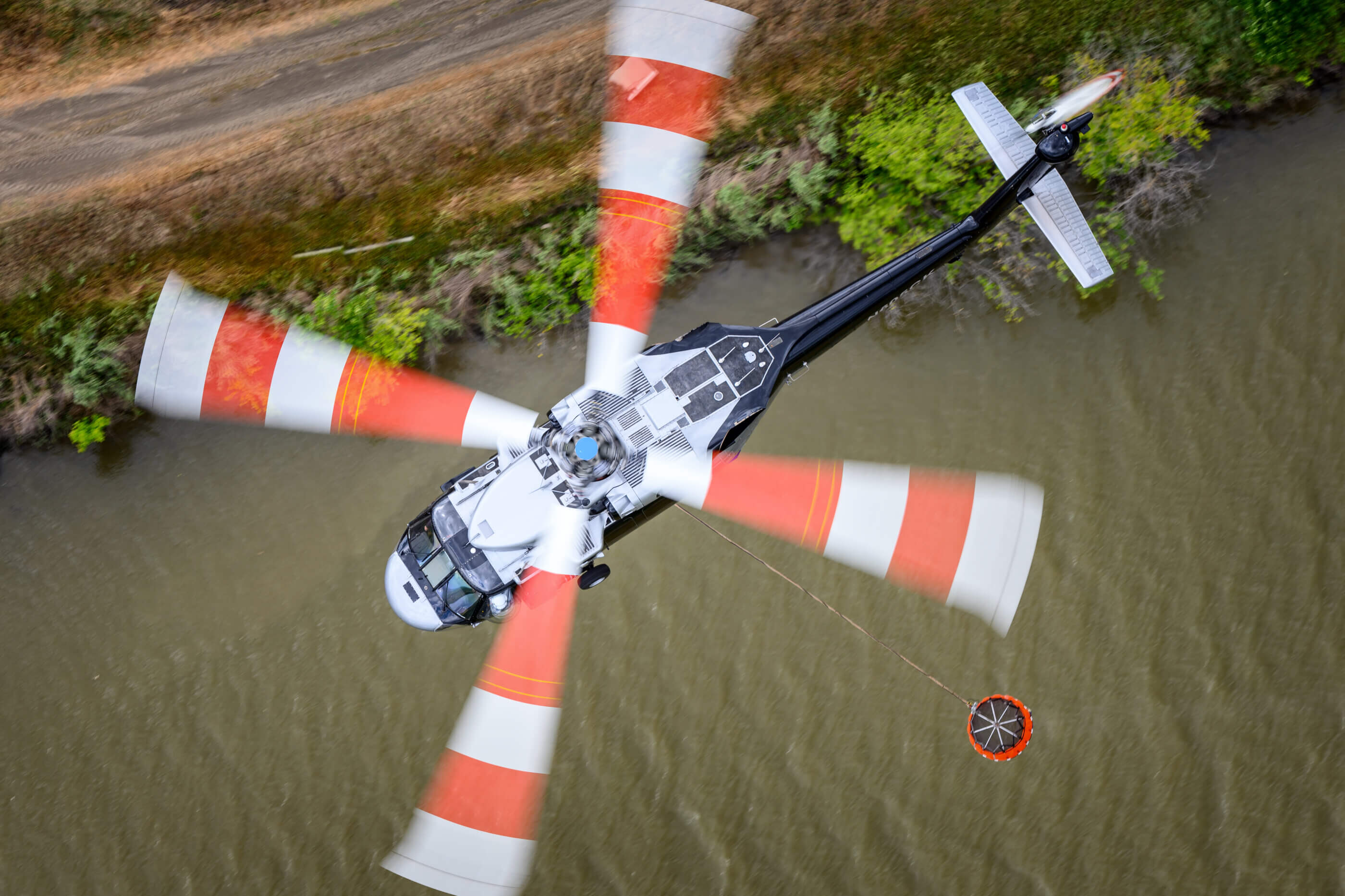
The move is the latest development surrounding the use of non-type certificated helicopters in Canada — most notably impacting the Sikorsky UH-60 Black Hawk and Boeing CH-47 Chinook.
The operation of these aircraft in the country has been an extremely divisive and much-debated topic ever since exemptions from Transport Canada allowed their introduction in 2022.
Proponents have argued that the types provide a much-needed boost in capability for Canada’s firefighting fleet, in particular. Those arguing against their use highlight safety concerns from the lack of a type certification program, part tracking issues, and unfair competition versus more expensive type-certified aircraft.
Transport Canada’s announcement — contained within a Civil Aviation Safety Alert (CASA 2025-12) — follows the regulator’s decision last year to stop accepting applications for Special Certificates of Airworthiness – Limited for helicopters intended for operation under Canadian Air Regulations (CAR) Subpart 702 Aerial Work.
The regulator said the move “reaffirms Canada’s commitment — together with the United States of America and Mexico — that experimental or ex-military aircraft with type certificates derived from military experience are not authorized for specialty air services operations.”
There has been a “notable rise” in commercial operations using ex-military aircraft for aerial work purposes, Transport Canada says in the CASA. “This trend may signal a significant shift in the risk landscape.”
Operators currently using aircraft under this authorization have been told their existing approvals will remain valid until their respective expiry dates.
Meanwhile, just a couple of days remain for all Canadian stakeholders to respond to a Preliminary Issue and Consultation Assessment (PICA) that Transport Canada is using to evaluate the future use of foreign ex-military aircraft for commercial operations.
“While earlier policies permitted limited transfers of ex-military aircraft into commercial service, newer and more complex models present greater challenges in demonstrating equivalent levels of safety, particularly when the applicants are not the original manufacturers,” the regulator states in the CASA. “At the same time, growing demand for aerial firefighting and other specialized missions highlights the potential public benefits of expanding aircraft availability.”
The final decision, it said, “will ultimately seek to balance the potential public and operational benefits of integrating ex-military aircraft into commercial service against the associated safety risks, regulatory obligations, and broader economic considerations—including access to affordable aircraft for specialized missions.”
A risk assessment commissioned by Transport Canada in the fall of 2024 explored three risk control options in relation to the use of foreign ex-military aircraft for commercial operations. The final recommendation was to allow their use in CAR 702 operations and address the short- and long-term risk by amending the existing regulatory framework, despite acknowledging that it would result in “a negative impact to Canadian operators.”
The PICA is the industry’s first chance to respond, representing the earliest stage of policy development.